Artificial intelligence (AI) is rapidly transforming workplaces around the globe. Buzzwords like "automation", "digital workforce", and "machine learning" often ignite nervousness among employees and headlines scream that jobs are in jeopardy. But what if we've got it wrong? What if, instead of fearing AI as a job-stealer, we embrace it as a tool for eliminating the boring, repetitive tasks that drain our time and energy?
In this article, you'll learn why the true power of AI isn't to replace people, but to elevate them—freeing us from drudgery and helping us focus on what we do best.
The Human Impact of Repetition at Work
Almost every role includes tasks that are dull but necessary. Data entry, form filling, responding to routine emails—these are the chores that no job description celebrates, but most employees have to endure. According to a 2022 Zapier report, the average office worker spends at least one-third of their day on repetitive tasks.
These tasks sap creativity, reduce job satisfaction, and ultimately contribute to burnout. When people are buried under the weight of monotony, they have less capacity for creative problem-solving or meaningful customer interactions—the true value they bring.
AI: The Ultimate Assistant, Not the Ultimate Replacement
Artificial intelligence can easily take over the tasks that people find boring. With smart automation, businesses can use AI to:
- Automate data entry and processing
- Generate routine reports
- Sort and categorize large volumes of information
- Respond to simple customer queries
- Schedule meetings and appointments
With automation handling the repetition, people are free to concentrate on strategy, relationship-building, innovation, and critical thinking.
Case Study: Streamlining Recruitment with AI
Take recruitment, for instance. Screening hundreds of resumes for keywords is mind-numbing and time-consuming. AI tools can automate the initial screening, flagging the best candidates based on pre-defined criteria. Human recruiters are then freed to focus on interviewing, building rapport, and making nuanced decisions based on culture fit and intuition—things machines can't do well.
Human Skills Remain Irreplaceable
Work isn't just about efficiency, and it's certainly not only about ticking boxes. People add irreplaceable value in areas such as:
- Empathy and Emotional Intelligence: Understanding subtle cues, building trust, and responding to emotion
- Creativity and Innovation: Generating new ideas, seeing connections between unrelated concepts, artistic expression
- Critical Thinking: Making complex decisions with incomplete information, identifying patterns that algorithms might miss
- Ethics and Values: Acting in line with cultural, social, and ethical considerations
No matter how sophisticated AI becomes, these inherently human skills are difficult—if not impossible—for machines to replicate.
AI as a Collaboration Partner
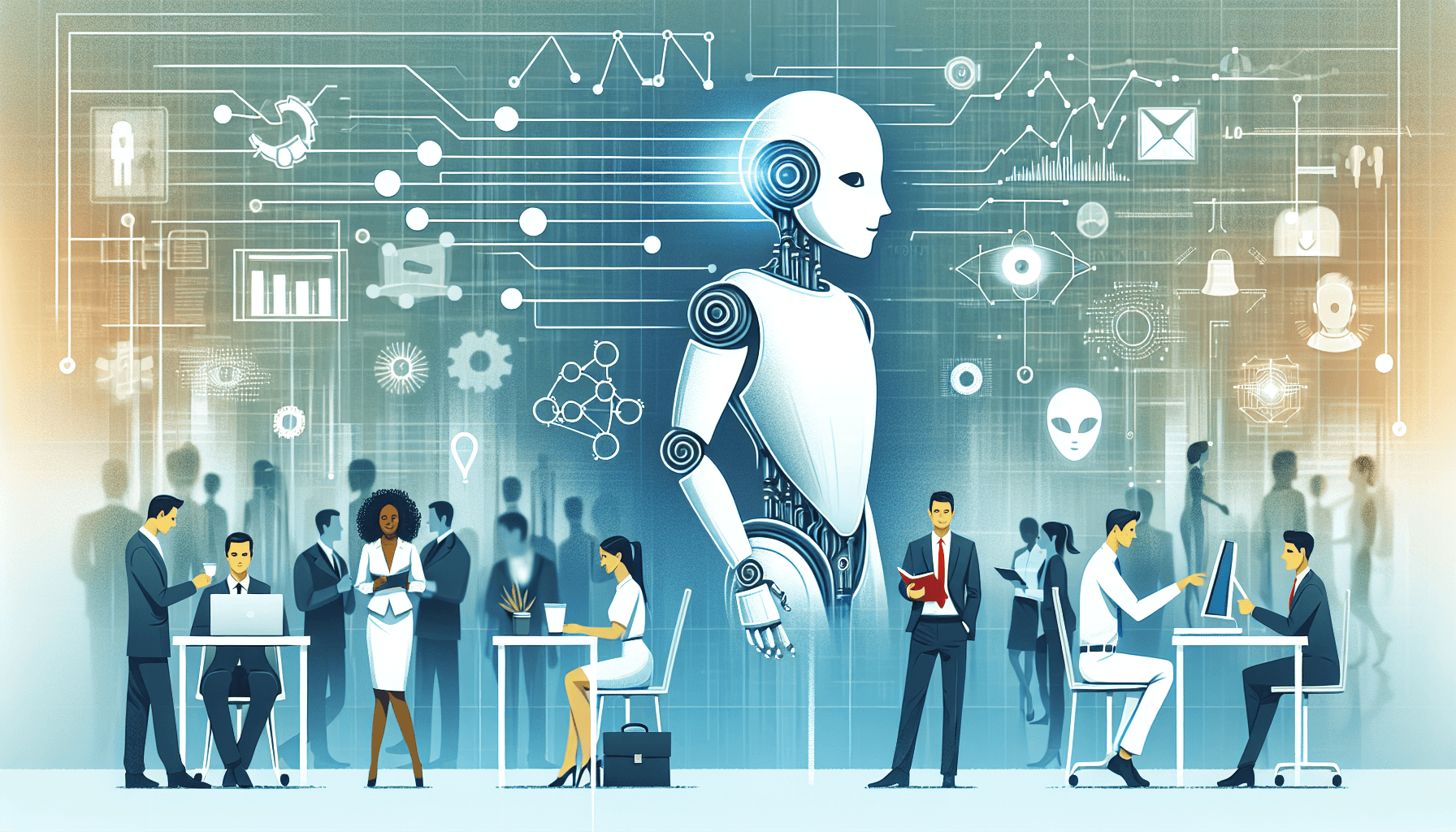
When AI is implemented thoughtfully, it can become a trusted partner, rather than a competitor. Successful organizations are using AI to augment human capabilities, not to replace their people. For example:
- Healthcare: AI processes scans or lab results quickly, spotlighting anomalies for a doctor to review. The physician then uses judgment, expertise, and empathy to make the final call and communicate with the patient.
- Customer Service: AI chatbots tackle standard queries 24/7, while human agents handle complex problems and develop customer relationships.
Such synergy lets employees focus on the meaningful parts of their work—the parts that require intelligence, creativity, and connection.
Addressing the Fear of AI
Understandably, concerns remain. Digital transformation can feel threatening if people assume that AI’s purpose is to replace them. The key is for leaders to communicate clearly: AI should be positioned as a tool for making jobs better, not obsolete.
Tips for teams and leaders:
- Start with consultation: Ask employees what parts of their jobs are repetitive or frustrating.
- Automate transparently: Explain what AI will do, and what people still need to do.
- Upskill and reskill: Use the time saved to help staff learn new skills, move into higher-value roles, or focus on strategic projects.
- Measure value in impact, not hours: Recognize and reward employees for creativity, collaboration, and customer outcomes—not just for ticking off tasks.
The ROI of Ditching the Drudgery
The organizations that get this right report big wins. Employees are happier and more engaged, productivity increases, and businesses enjoy higher retention. According to a 2023 Forbes article, automating repetitive work can boost productivity by 30% or more, while making jobs more attractive.
This isn’t a pipe dream—companies like Microsoft, UiPath, and Atlassian regularly share stories of entire teams reclaiming hours of their weeks for upskilling, mentoring, and creative brainstorming.
The Future: Human-Centric AI
AI will keep advancing, but it should be in service of people. Used wisely, it liberates us from mundane and repetitive activities, letting us focus on the fulfilling, uniquely human work that technology can't touch.
The right question, then, isn't "Will AI take my job?"—it's "How can AI take the boring parts, so I can do more of what matters?"
Conclusion
Artificial intelligence holds enormous promise—but only if we use it to elevate people, not erase them. By removing the repetitive, boring elements from our jobs, AI gives us back time, energy, and purpose. Organizations that harness AI as an empowering tool can create workplaces where technology and humanity thrive together—making both business and employee experience better, not just more efficient.
Ready to rethink the way you work? Start by identifying the boring parts—and let AI handle the rest. Your team (and your bottom line) will thank you.